A reflection on Yukimura ryu taught by Murasaki-sensei
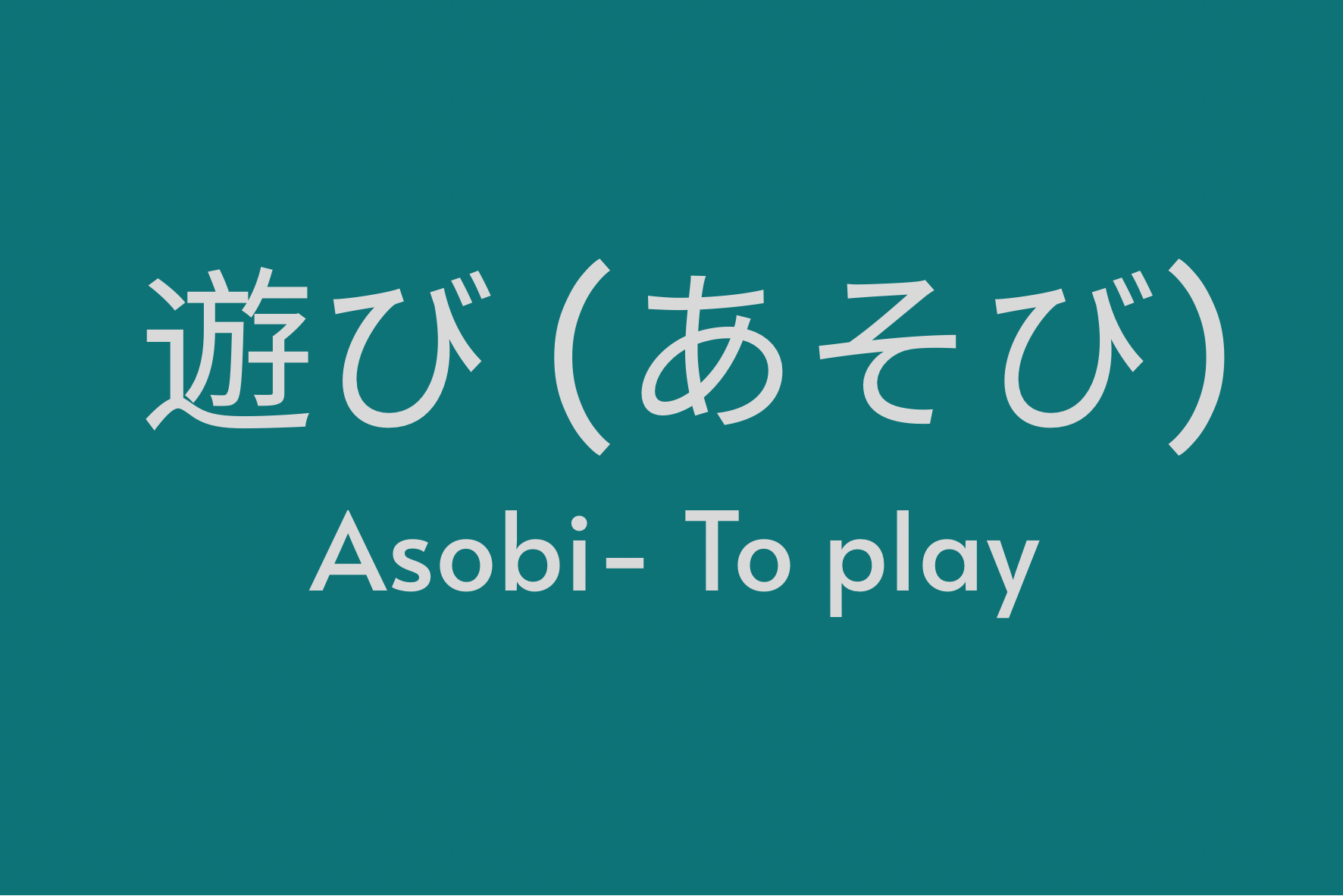
Asobi- To play 遊び (あそび)
Sitting together on the tatamis, surrounded by a loose rope dropped to the ground after an exercise in playing with tension, distance and timing, we begin to discuss the concept of “asobi” or “play” in Japanese. Murasaki-sensei uses a small white board to write the characters as she explains.
Asobi means to play, which has many connotations. In addition to playing like children, we also play in many ways as adults. But we can also give something play. We do have this concept in English as well, though it isn’t used very commonly in everyday speech.
In English, ‘give full play to’ is the idea of allowing something to develop or be expressed fully (according to the Cambridge Dictionary). It can also be used in machinery or rope as to “give (more/ more room to) play,” as in to make something looser or to give the “possibility of free and easy movement.”
In Japanese, “To give something ‘asobi’ (play)” means to allow some margin or leeway in something, which can have various implications both functionally and psychologically.
Specifically, it refers to gaps or flexibility in the design of machinery or structures, the leeway in schedules or plans, and even the mental room that gives people a sense of ease.”
This leeway can be functional: allowing gaps or movable parts to accommodate friction, expansion and contraction; temporal: allowing room in time and schedules for the unexpected; or psychological: leaving mental space for rest, space to think, or flexibility in unexpected change.
What I took from this discussion as we sat there on the tatamis, with great apologies to Murasaki-sensei for any misunderstandings on my part, is something about subtlety and space. That when we begin to play with a partner, whether that is with rope or any other play, really, is to give this room to play.
In other words, we don’t begin with the highest level of force or constriction. We leave a bit of space in our expectations, in timing, in distance. And in this space, there is room for adapting. Room to watch our partner and gauge the response. Room for them to react, for their body to shift both physically and mentally. Space for them to communicate back.
And we might play (as in tease; have fun) with small shifts in this leeway, with more tension or less, with speed or slowness, with slowly working our way towards “kime” (“checkmate”), where this leeway has been removed, where they are captured and finally at our mercy.
On this pathway remains much potential. For softness and “aibu”- “caressing,” as well as for “seme” – “torture”, firmness and control. We can play and wait, observe, follow the desire we receive or deny it. Take space and make them question, or go close and indulge. Allowing still some leeway, some asobi, for the unexpected, even while we might slowly move our way towards full control, asking for, or demanding submission and giving or taking our pleasure.
——
It would take me two more days of pondering in order to put this into words. And as I pondered, I realized how many parallels there are in this concept to that of relationships, more generally.
I am reminded of two leading thinkers in the psychology of desire, who have stated:
“When you’re erotically drawn to someone new, the mystery of the unknown creates a realization of distance.“ — Jack Morin
and,
“We know desire is rooted in absence and yearning. What you don’t have is often ten times richer than what you actually experience.” —Esther Perel.
We create and maintain desire through exactly this leeway, this space, distance, the intangible expectations with adequate room to manoeuvre, to dream, to be curious.
As soon as we fix something, force it, conquer it, make it rigid or unable to shift, we have ended the exploration. And while this moment can be the pinnacle of a play session, trapping and calling checkmate on the game, we must then step back.
There is no more room for movement if we stay in that space forever. We must again create the space to play, to explore, to allow evolution to be possible and curiosity to remain. Without it, we will get bored, feel trapped, and lose desire.
By allowing our partners and ourselves space, to give our lives asobi, we can invite a sense of ease and playfulness.
Leave a Reply